Would you like to build a Mediterranean's passive house, we will explain how much a passive house costs and take an in-depth look at the costs associated with building a “conventional” house that complies with the 2019 Spanish Building Technical Code (CTE) compared with a Passivhaus certificadaWe will provide a detailed breakdown of the budget per square meter, clarifying doubts and debunking some common myths surrounding this type of highly energy-efficient building.

Key factors that influence the cost of a passive house
Before addressing the main topic of the article, it is necessary to explain that Spain’s Building Technical Code (CTE) was updated in 2019 with a key change: the introduction of Nearly Zero Energy Buildings (NZEB). This regulation requires all new buildingsto comply with much more stringent energy efficiency standards.. Unlike the 2013 regulation, which already set certain limits, the 2019 update focuses on significantly reducing buildings’ energy consumption. Therefore, a dwelling that meets the CTE 2019 standards can nowadays be considered a passive house..
Having clarified this point, construction costs can vary considerably depending on several factors, such as geographic location, architectural design, and the materials used. For example, on the mainland Mediterranean coast, construction costs are usually lower than on an island such as Mallorca, where prices tend to be higher. In Menorca, these costs may increase even further.
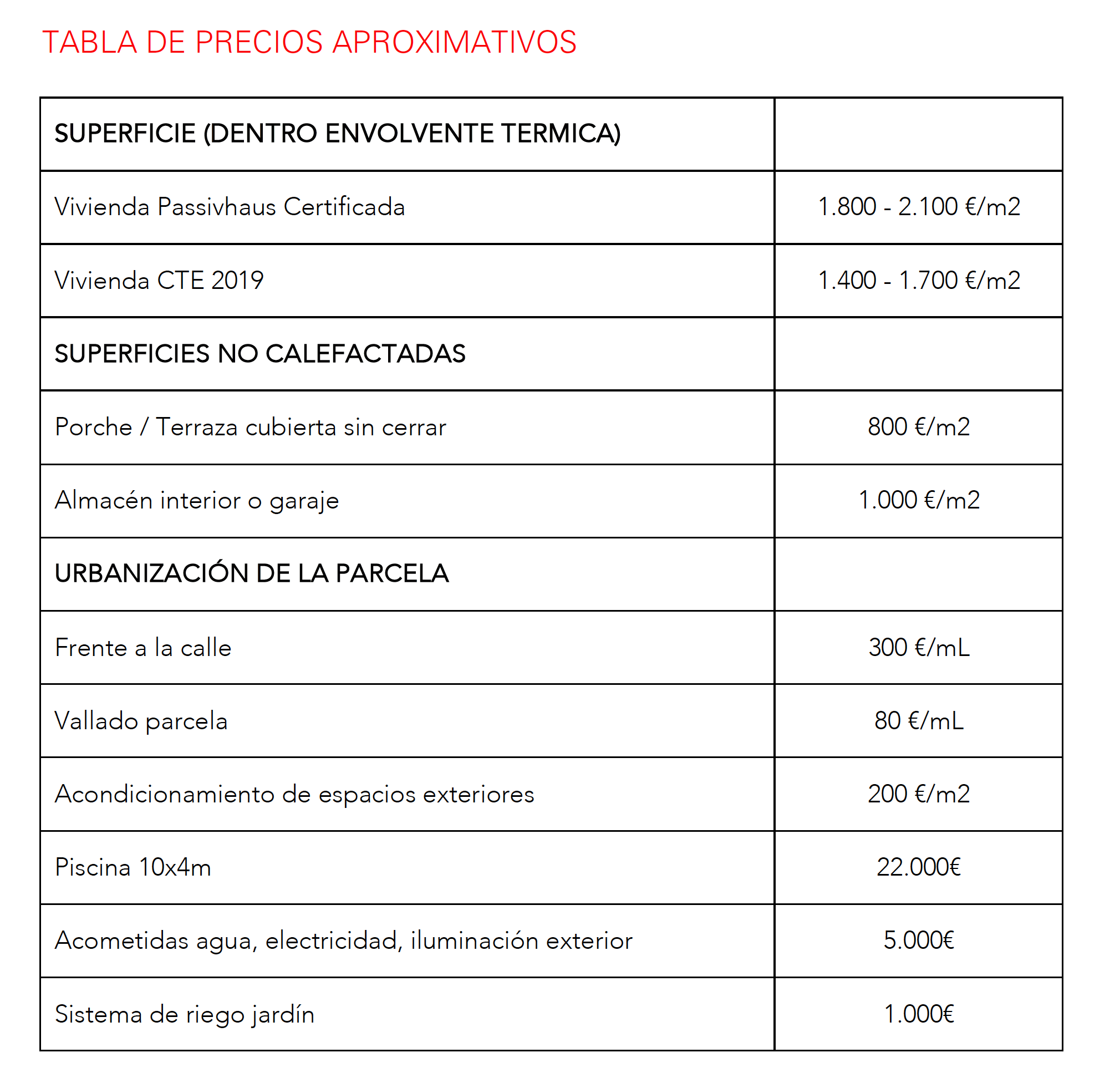
In general terms, the cost of building a house that complies with CTE 2019 currently ranges between 1,400 and 1,700 € per square meter of built area.
It is important to note that this price is only a reference for homes that strictly comply with CTE 2019 regulations. It should also be clarified that certain spaces, such as a garage or storage area, which are usually not heated, typically cost between €800 and €1,000 per square meter.
Cost Breakdown for Building a Passivhaus
On the other hand, the Passivhaus standard, which originated in Germany, goes beyond the requirements of the CTE 2019 and is known for its more stringent demands in terms of energy efficiency and comfort. A certified Passivhaus requires a higher investment due to the high standards for insulation, airtightness, and controlled ventilation systems.
The cost of building a Passivhaus certificada is estimated at around 1.800 – 2. 100 €/m² of built area. This additional cost is due to the precision required in construction to meet airtightness standards, higher levels of insulation, and the installation of high-efficiency ventilation systems. Despite the higher initial investment, a Passivhaus offers superior energy efficiency and lower electricity costs in the long term.
We can observe that a certified Passivhaus tends to be between 10% and 20% more expensive to build initially. However, this additional cost is offset over the long term thanks to the energy savings generated.
Is it worth building a Passivhaus?
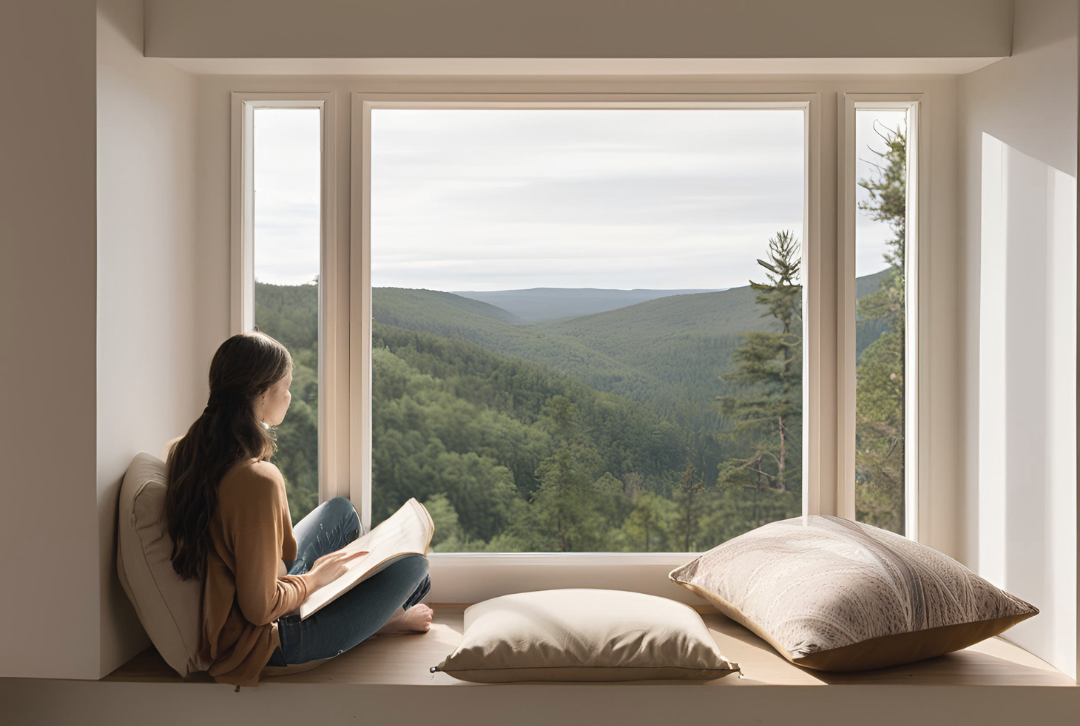
The main difference between a CTE 2019 – compliant house and a Passivhaus lies in their level of energy efficiency. Passivhaus buildings are characterized by extremely low energy demand, which translates into significant savings in heating and cooling costs over time.
On the Mediterranean coast, a Passivhaus takes advantage of winter heat by allowing solar radiation to enter interior spaces. For this reason, appropriate bioclimatic design is crucial from the very early stages of the project. Thanks to its insulation and airtightness, a Passivhaus retains naturally gained heat and preserves it with minimal heating demand. In summer, solar shading systems become essential to maintain a comfortable indoor environment.
If you would like to delve deeper into the fascinating world of passive houses, we suggest reading the article: "What is a passive house?".
Is it profitable to build a Passivhaus?
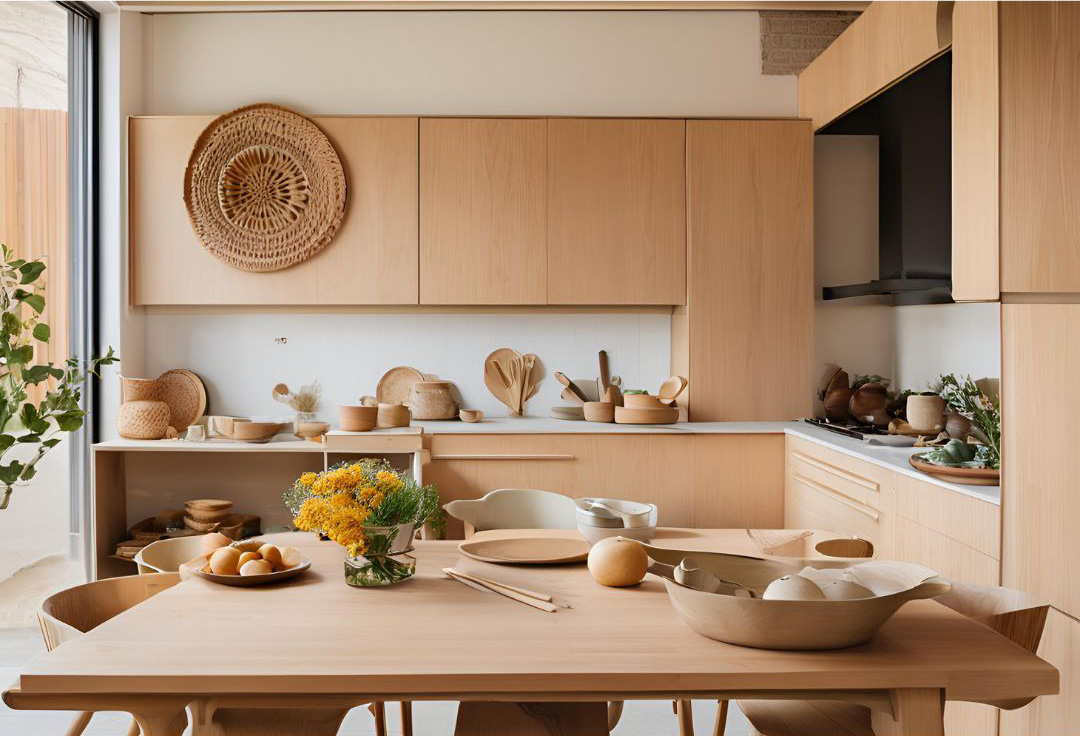
Definitely, building a passive house is profitable in the long term. Although the initial cost may be higher than that of a conventional home, the energy savings, increased comfort, and appreciation of the property compensate for it. In addition, the focus on sustainability and energy efficiency is not only beneficial for the owner, but also for the environment.
The Energy savings, which can reach up to 90%, make investing in a passive house a cost-effective option.. Furthermore, the reduced environmental impact and the improved quality of life for occupants—thanks to constant thermal comfort and better indoor air quality—are additional factors that reinforce the idea that a passive house is a smart and sustainable long-term investment.
READ MORE ARTICLES

¿Qué son los COVs?
En el ámbito de la arquitectura contemporánea, hablar de eficiencia energética ya no es suficiente. Hoy, el verdadero...

Which is cheaper: building or buying a house?
Many families who dream of owning their own home ask themselves the same question: is it more worthwhile to build or to buy…

Industrialized construction: the solution for the future of housing?
España se enfrenta a un reto estructural en el sector de la vivienda: necesitamos construir más y más rápido, sin...
MALLORCA
C/ Miquel dels Sants Oliver 9, 07011 Palma
BARCELONA
C/ de l'Alzina 21, 08024 Barcelona
PARIS
18 Rue Saint Bernard, 75011 Paris
