
Spain faces a structural challenge in the housing sector: we need to build more and faster without sacrificing quality or sustainability. Industrialized construction emerges as a key solution to meet this growing demand, especially given the limitations of the traditional system.
One of the main obstacles is the lack of skilled labor. Construction is no longer an attractive option for young people, and the entry of new generations into the trade is increasingly scarce. This has led to a heavy reliance on immigrant labor, which, in many cases, lacks specific training or prior experience in the sector. This shortage of professionals directly affects the quality of execution and the ability to meet technical and regulatory standards, impacting timelines and costs.
In response to this situation, industrialized construction emerges as an efficient and sustainable solution. By significantly reducing the need for on-site labor—thanks to the prefabrication of elements in controlled environments—many problems associated with the traditional system are mitigated. Moreover, this model offers environmental advantages that are increasingly relevant today.
Industrialized construction generates less waste, reduces material loss, and promotes more efficient use of resources. Much of the process is moved to workshops or factories, allowing greater precision in cutting and assembly and contributing to a significantly lower carbon footprint. Additionally, it improves the management of surplus materials, facilitates selective waste collection, and, in the event of future demolition, simplifies the sorting of reusable or recyclable materials, thus aligning with the principles of circular construction.
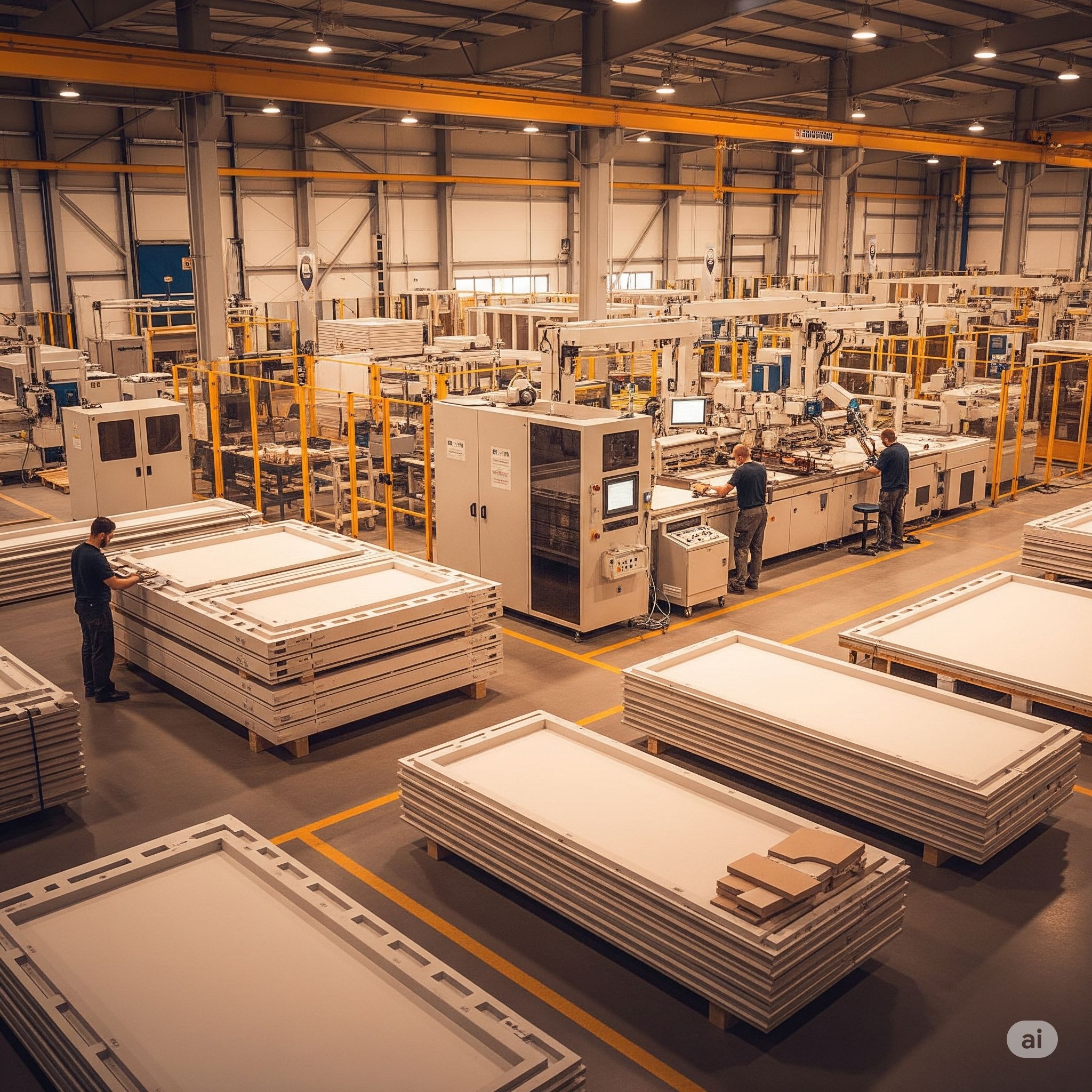
What is industrialized construction?
Industrialized construction is a building system based on the fabrication of structural elements and components off-site, usually in specialized factories or workshops. These elements are then transported to the construction site for assembly, minimizing on-site work.
This model is based on five fundamental principles that set it apart from traditional construction:
1. Speed of execution
By manufacturing elements in parallel with site preparation, construction times are optimized. This allows delivery times to be significantly shortened, which is especially valuable in a context of high demand and urgent housing needs.
2. Assured construction quality
Industrial processes allow greater control over materials and finishes. Construction in a controlled environment minimizes human errors, improves precision, ensures uniform quality across all components, and makes it easier to comply with demanding standards, such as energy efficiency.
3. Specialized labor
Although less on-site personnel is needed, the system requires highly specialized workers for technical processes and assembly. This improves the overall efficiency of the process and reduces unforeseen issues during execution.
4. Dry processes
Unlike traditional construction, which relies heavily on wet processes (concrete, mortar, formwork), industrialized construction uses dry systems, which are cleaner, faster, and have a lower environmental impact.
5. Construction without surprises
Private clients gain peace of mind. Because it is a more controlled process with more predictable timelines and costs, deviations, cost overruns, and delays are reduced, offering a safer and more reliable construction experience.
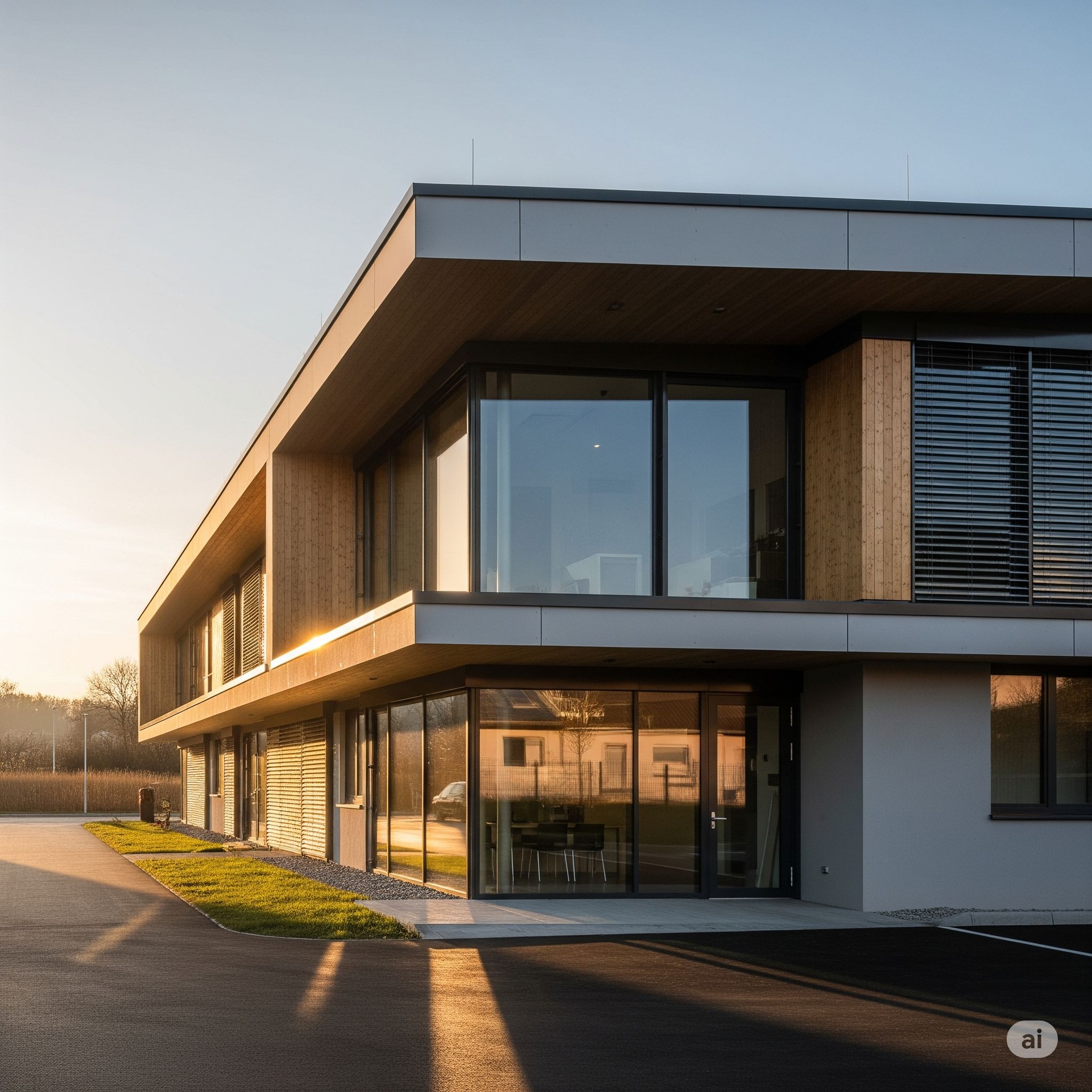
Industrialized construction and the environment: a more responsible option
In a context where the construction sector is responsible for a high percentage of global emissions and waste generation, adopting sustainable solutions is no longer an option—it is a necessity. In this sense, industrialized construction represents a significant improvement in environmental terms compared to traditional methods.
1. Lower ecological impact
By moving much of the construction process to controlled industrial environments, material use is optimized, energy consumption is reduced, and errors that generate waste are minimized. This directly reduces the carbon footprint, both during production and assembly.
2. Cleaner and more organized construction sites
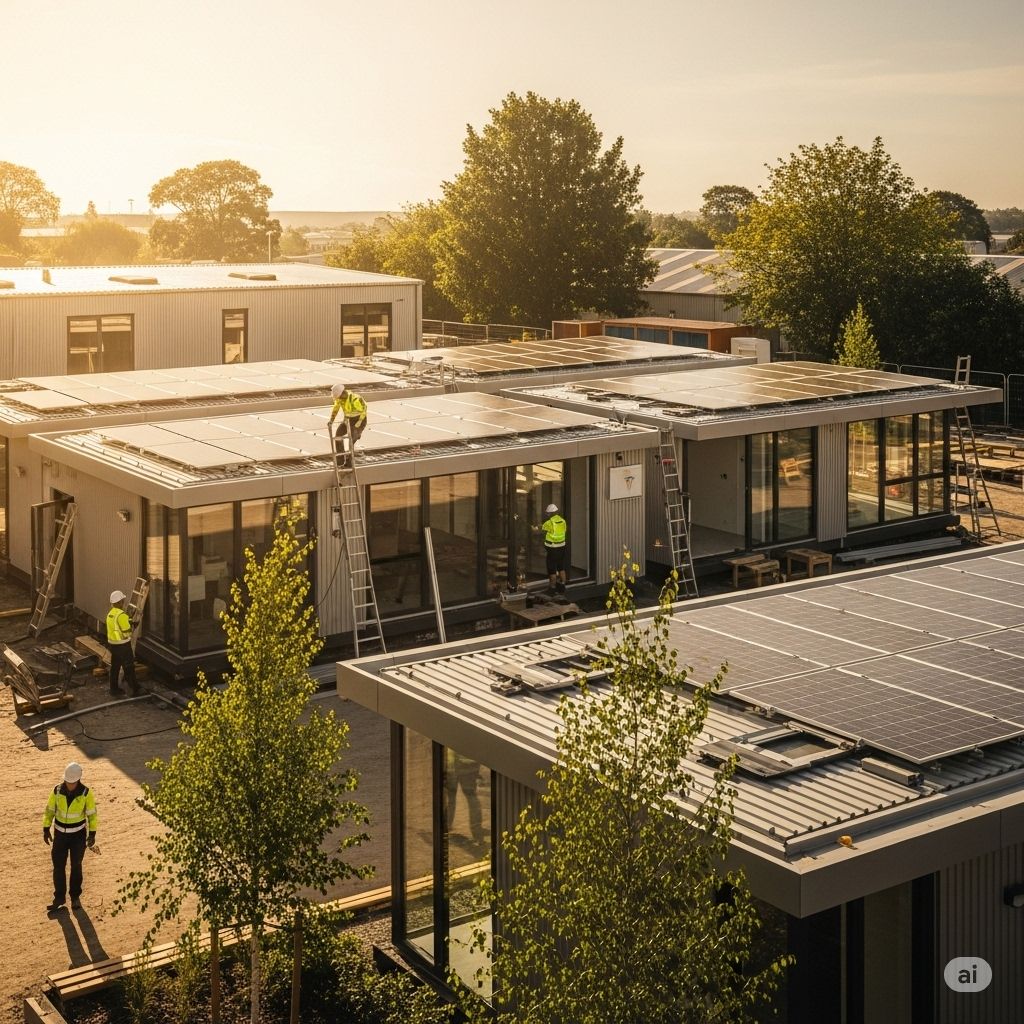
On-site work is limited to assembly and finishing tasks, resulting in cleaner, quieter, and safer work environments. This cleanliness not only improves conditions for workers but also reduces disturbances for the surrounding area—particularly valued in urban or residential zones.
3. Better waste management and recycling
Waste generation is significantly lower thanks to precise cutting and quality control in the factory. Additionally, because modular systems and standardized components are used, it is easier to sort, recover, and recycle leftover materials. Even in future phases, such as potential demolition, industrialized components allow for more efficient material recovery, promoting circular construction models.

Industrialized construction and Passivhaus: energy efficiency with guarantees
Industrialized construction naturally aligns with the principles of the Passivhaus standard, one of the most demanding in the world in terms of energy efficiency, indoor comfort, and construction quality. In fact, more and more developers and architectural firms are turning to industrialized systems to more easily achieve this certification.
1. Passivhaus-certified construction elements
Many of the components used in industrialized construction—panels, windows and doors, façades, ventilation systems, etc.—have Passivhaus certification, ensuring they are designed and manufactured under strict efficiency and airtightness criteria. This not only provides confidence but also facilitates compliance with the required technical standards.
2. Better-controlled construction details
Working in a workshop environment allows technical details to be resolved with greater precision. Industrialization enables millimetric control over joints, insulation, and sealing, which is key to avoiding thermal bridges and air leaks—critical aspects in any Passivhaus building.
3. Consistent execution quality
The variability of labor and on-site conditions in traditional construction can affect final quality. In an industrialized system, execution quality is more uniform and reliable, helping meet the energy consumption, thermal comfort, and airtightness parameters required by the standard.
4. Simpler and more predictable certification
Thanks to this precision and the use of pre-certified components, the Passivhaus certification process is simplified. On-site uncertainties, execution errors, and costly last-minute corrections are reduced, making it easier to achieve certification with guarantees.
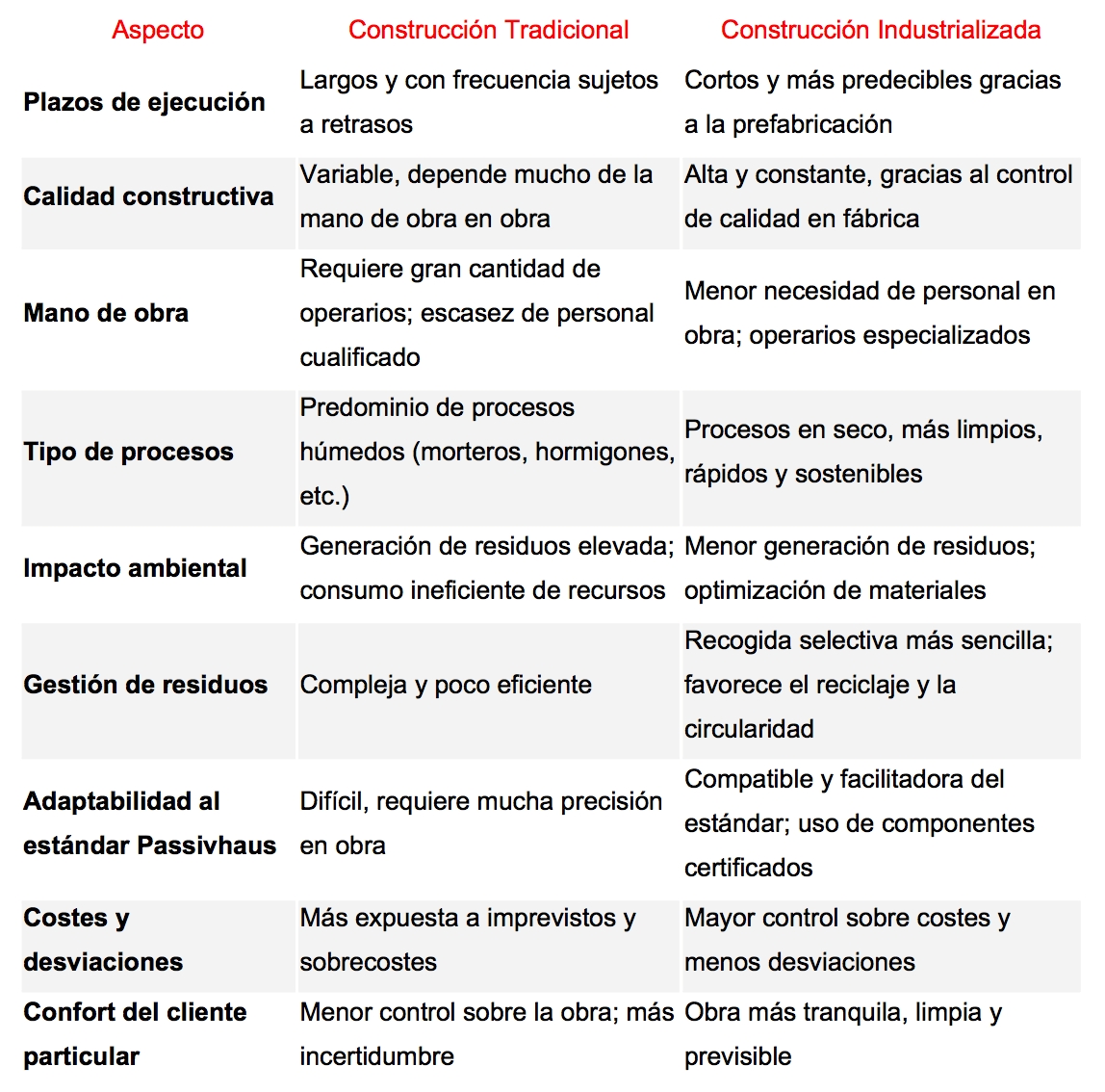
Comparison: Industrialized Construction vs. Traditional Construction
Discover the reasons to choose a Passive House architect at this link here
Conclusion: Sendra Arquitectura’s vision on industrialized construction
At Sendra Arquitectura, we firmly believe in the advantages that industrialized construction brings to the sector: speed, quality, efficiency, and sustainability are key aspects that contribute to improving the homebuilding experience.
However, we also advocate for maintaining the personalization and unique character of each project. Architecture is not only about processes and materials; it must express the identity, desires, and needs of each client. That is why, in our studio, we pursue an intelligent balance: industrializing certain processes to optimize resources and time, while still ensuring a personalized design that makes each project special and distinctive.
This hybrid approach allows us to deliver high-quality, efficient, and environmentally friendly homes without sacrificing the creativity and uniqueness that define Sendra Arquitectura.
If you are thinking of building or renovating, do not hesitate to contact us to explore together how to combine the best of both worlds in your project.
READ MORE ARTICLES

¿Qué son los COVs?
En el ámbito de la arquitectura contemporánea, hablar de eficiencia energética ya no es suficiente. Hoy, el verdadero...

Which is cheaper: building or buying a house?
Many families who dream of owning their own home ask themselves the same question: is it more worthwhile to build or to buy…

Low-energy homes and energy independence
La última semana, miles de hogares quedaron a oscuras por un apagón eléctrico inesperado. A día de hoy, aún no se ha...
MALLORCA
C/ Miquel dels Sants Oliver 9, 07011 Palma
BARCELONA
C/ de l'Alzina 21, 08024 Barcelona
PARIS
18 Rue Saint Bernard, 75011 Paris
